

Brain Injuries
How Do You Prove a Brain Injury After a Car Accident?
A brain injury after a car accident is proven through a combination of medical documentation, objective testing, and evidence of how your life changed. That usually means prompt emergency or physician records, imaging such as a CT or MRI where indicated, evaluation by a neurologist or neuropsychologist, consistent treatment records, and testimony from people who saw changes in you. Because mild brain injuries often look normal on standard scans, the quality of the surrounding documentation matters a great deal.
Insurance companies tend to scrutinize brain injury claims closely, particularly when there was no loss of consciousness or no visible damage on imaging. Building the record early is the best protection.
Start With Prompt Medical Care
The first medical records after the accident carry weight. They document your symptoms close in time to the crash, which helps connect the injury to the accident and answers arguments that your symptoms came from something else. Tell every provider about every symptom, including headaches, dizziness, memory lapses, or changes in mood, even if they seem minor.
Types of Evidence That Help Prove a Brain Injury
| Evidence | What It Shows |
|---|---|
| Emergency and treating physician records | Early symptoms, exam findings, and the timeline of treatment |
| CT or MRI imaging | Bleeding or structural damage when present; often normal in mild injuries |
| Neuropsychological testing | Measurable changes in memory, attention, processing speed, and executive function |
| Neurologist or specialist evaluation | A professional diagnosis and an opinion on cause and prognosis |
| Witness statements | Observed changes in personality, memory, or behavior |
| Work and school records | Performance drops, missed time, or reduced duties |
| Crash evidence | The forces involved, such as airbag deployment, vehicle damage, or a head strike |
Why Normal Scans Do Not End the Discussion
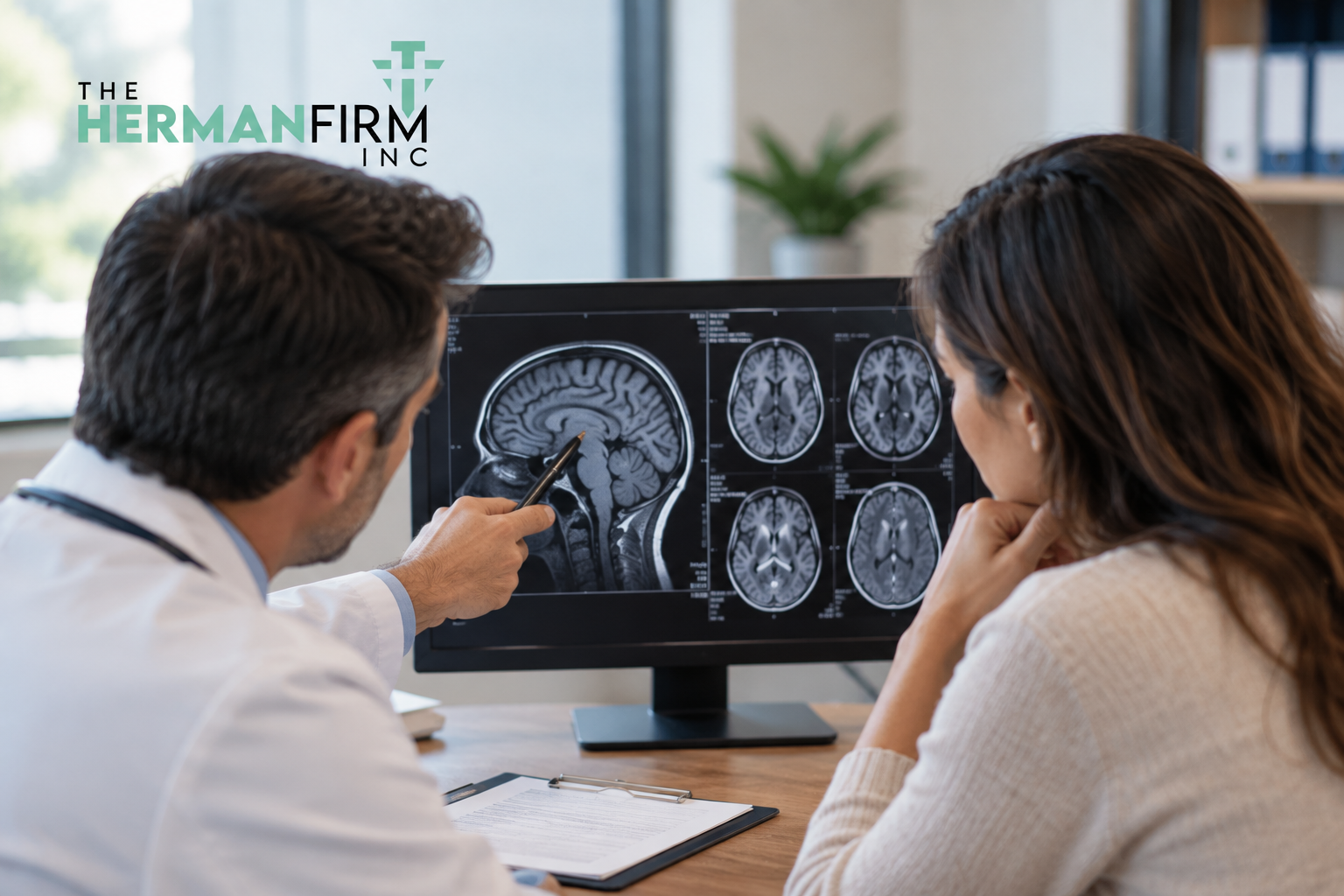
Standard CT and MRI scans are designed to find bleeding, swelling, and structural damage. Mild traumatic brain injuries, including concussions, frequently do not show up on them even though symptoms are real. Some clinicians use more advanced imaging or functional testing in certain cases, though its role is debated, which is why neuropsychological testing and clinical evaluation are often central to proving these injuries.
Neuropsychological Testing
A neuropsychologist administers standardized tests that measure thinking, memory, attention, and problem solving, then compares results with expected norms. This can provide objective evidence of cognitive deficits when imaging is normal. Testing often has the most value when it is done by a qualified specialist and when results are consistent with the symptoms recorded elsewhere.
A brain injury claim is only as strong as its documentation. A free case review can help you understand what you have and what is missing.
Get a Free Case ReviewThe People Around You Are Evidence Too
Family, friends, and coworkers often notice changes before you do, such as forgetfulness, irritability, withdrawal, or trouble keeping up at work. Their observations, and your own dated journal of symptoms, help show how the injury affects daily life in ways test results alone may not capture.
Common Insurance Arguments and How They Are Met
-
“There was no loss of consciousness.”
Most concussions occur without it. See our article on whether you can have a brain injury without losing consciousness.
-
“The scans were normal.”
Mild injuries often do not appear on standard imaging, and clinical and neuropsychological evidence can establish them.
-
“You waited to get treatment.”
Consistent, prompt treatment records are the best answer, which is why early care matters.
-
“This was pre-existing.”
Records of your functioning before the accident, compared with after, can show a clear change.
Keep every appointment record, referral, and test result. Gaps in treatment can be used to argue that your symptoms resolved or were never serious.
If you are dealing with a serious injury, an attorney who handles brain injury cases in Walnut Creek can coordinate with medical providers and experts to build the strongest possible record. For broader guidance, see what evidence you should keep after an injury.
Frequently Asked Questions
How long after an accident can a brain injury be diagnosed?
Diagnosis can happen at any point, but earlier documentation is generally more persuasive. Symptoms that surface later should still be reported and evaluated promptly.
Do I need an expert to prove a brain injury?
Many cases benefit from expert opinions, such as a neurologist or neuropsychologist, particularly when imaging is normal and the insurer disputes the injury.
Can I prove a brain injury with only symptoms?
Symptoms are important, but they are strongest when supported by medical records, testing, and witness observations rather than standing alone.
What if I had symptoms before the accident?
A pre-existing condition does not necessarily bar a claim. California law allows recovery for aggravation of an existing condition, though the evidence becomes especially important.
Need Help Proving a Brain Injury?
Every case at The Herman Firm gets direct attorney attention from the first call. Consultations are free, and you pay nothing unless we win.
Call 925-532-1977 Request a Free Case Review