

Truck Accidents
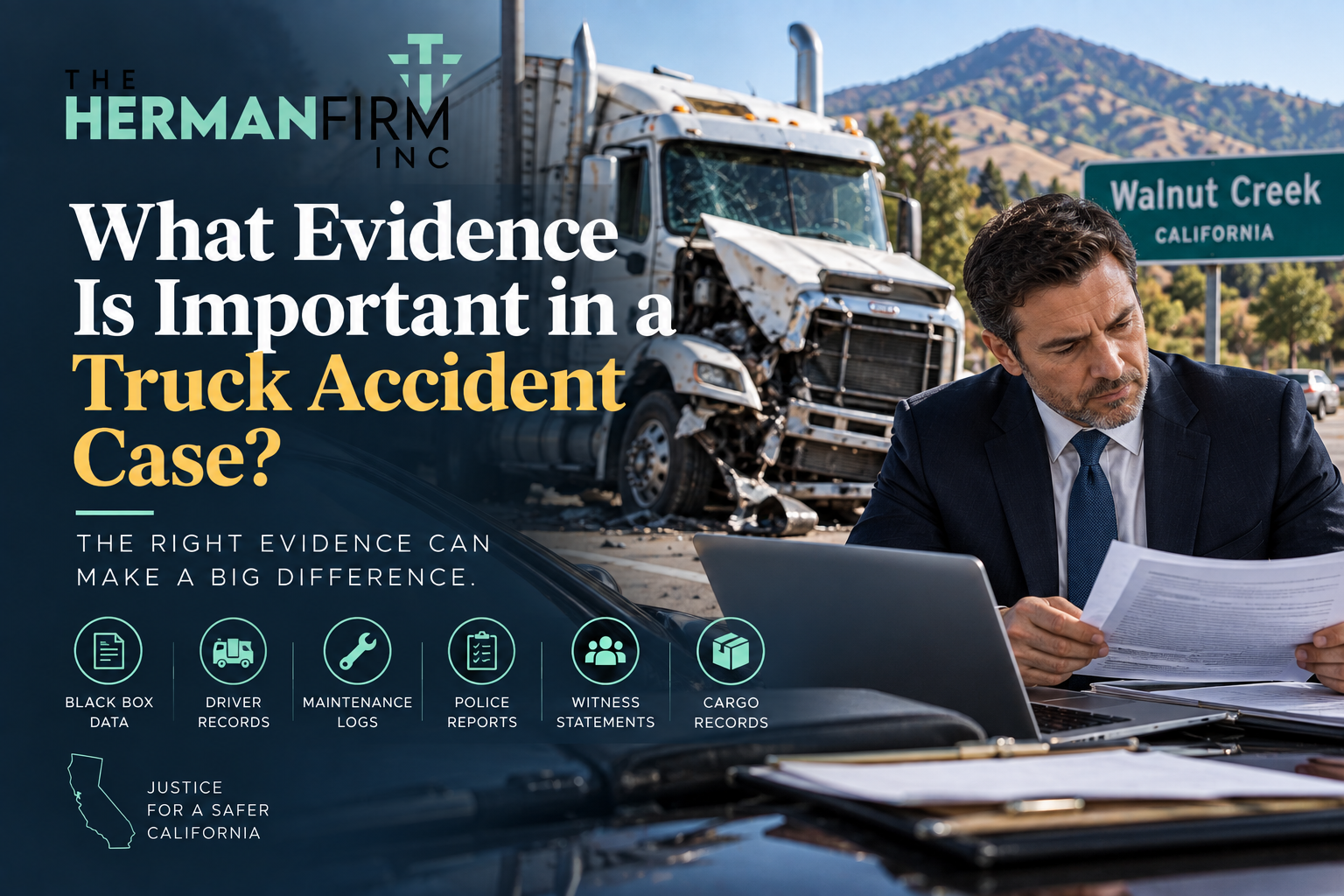
What Evidence Is Important in a Truck Accident Case?
Truck accident cases rely on a different, and often more technical, body of evidence than a typical car accident claim. Commercial trucks generate data and records that passenger vehicles simply do not, and much of it can be lost or overwritten within days if it is not requested quickly. Knowing what evidence actually matters, and how urgently it needs to be preserved, can significantly affect the outcome of a truck accident claim.
The most important evidence in a truck accident case includes the police report, photos of the scene and vehicles, witness statements, the truck’s electronic logging device data, black box event data, driver qualification and hours-of-service records, maintenance and inspection logs, and any cargo documentation. Much of this evidence must be requested quickly, since trucking companies are not required to preserve it indefinitely.
Why Truck Accident Evidence Is Different
A car accident claim usually relies on a police report, photos, and witness statements. A truck accident claim involves all of that plus a substantial amount of additional evidence generated by the truck itself and by the trucking company’s own record-keeping obligations under federal law. This evidence can establish fault with far more precision than physical evidence alone, but it is also more fragile, since much of it exists only in digital systems that get overwritten or purged on a routine schedule.
Key Categories of Evidence
| Evidence Type | Why It Matters |
|---|---|
| Electronic logging device (ELD) data | Shows the driver’s actual hours behind the wheel and whether hours-of-service limits were exceeded |
| Black box / event data recorder | Captures speed, braking, and other data in the moments before the crash |
| Driver qualification file | Reveals licensing status, training, and any prior safety violations |
| Maintenance and inspection records | Shows whether known mechanical issues went unaddressed before the crash |
| Dispatch and cargo records | Can reveal scheduling pressure or improper cargo loading tied to the crash |
| Police report and witness statements | Establishes the official account of how the crash occurred |
Electronic Logging and Black Box Data
Federal regulations generally require commercial trucks to use electronic logging devices that record a driver’s hours behind the wheel, which can reveal whether a driver exceeded legal hours-of-service limits and was fatigued at the time of the crash. Many trucks also carry event data recorders, sometimes called black boxes, which capture speed, braking, and other operational data in the moments leading up to a collision. This data is powerful evidence, but it is not preserved indefinitely, and it can be lost if not formally requested soon after the crash.
Sending a formal evidence preservation letter, sometimes called a spoliation letter, as soon as possible after a truck accident puts the trucking company on notice that this data must be preserved. Waiting even a few weeks can mean the data is already gone.
Driver Qualification and Hours-of-Service Records
Federal Motor Carrier Safety Administration regulations require trucking companies to maintain driver qualification files covering licensing, training, and safety history, along with hours-of-service records documenting how long a driver has been on duty. A violation found in these records, such as a driver working beyond legal limits or lacking proper qualifications, can serve as independent evidence of negligence.
Maintenance, Inspection, and Cargo Records
Trucking companies are required to keep maintenance and pre-trip inspection records for their vehicles. If a known mechanical issue, such as worn brakes or a tire defect, was left unaddressed before the crash, these records can establish that the company or driver was aware of a hazard and failed to correct it. Cargo loading documentation matters too, since improperly secured or overloaded cargo is a common contributing factor in serious truck accidents.
Truck accident evidence disappears quickly. If you were involved in a collision with a commercial vehicle, time matters.
Get a Free Case ReviewWho May Be Held Liable
Because truck accident evidence often points beyond the driver alone, to the trucking company, a maintenance contractor, a cargo loading company, or even a parts manufacturer, gathering the right evidence early can determine which parties can actually be pursued for compensation. Our article comparing truck accident claims with car accident claims covers this difference in more detail, including how insurance coverage and liability typically work in these cases.
Why an Early Investigation Matters
Trucking companies often begin their own investigation, and sometimes their own legal defense, within hours of a serious crash. Their investigators may arrive at the scene quickly to document conditions favorable to their position. Starting your own evidence-gathering process just as early, including sending preservation letters and documenting the scene, helps level that playing field. For broader guidance on preserving evidence after any injury, see our article on what evidence you should keep after an injury.
Frequently Asked Questions
How quickly does electronic logging data get lost?
It varies by system, but this data can be overwritten or automatically deleted within days to weeks if it is not formally requested. This is one of the main reasons truck accident cases require faster action than typical car accident claims.
Can I request the truck’s black box data myself?
You can request it, but trucking companies and their insurers are not always cooperative, and the data can be technical to interpret. An attorney can send formal preservation and production requests and, if necessary, involve an accident reconstruction expert to analyze the data.
What if the trucking company says they don’t have the records anymore?
If evidence is destroyed after a preservation request has been sent, or after the company reasonably should have anticipated a claim, this can sometimes support a separate legal claim for spoliation of evidence, depending on the circumstances.
Does the driver’s employment status affect what evidence matters?
Yes. Whether the driver is a direct employee or an independent contractor can affect which liability theories apply and which records become relevant, which is part of why a thorough early investigation matters in these cases.
Involved in a Truck Accident?
Truck accident evidence disappears quickly. Every case at The Herman Firm gets direct attorney attention from the first call, and consultations are free.
Call 925-532-1977 Request a Free Case Review