

Car Accident Law
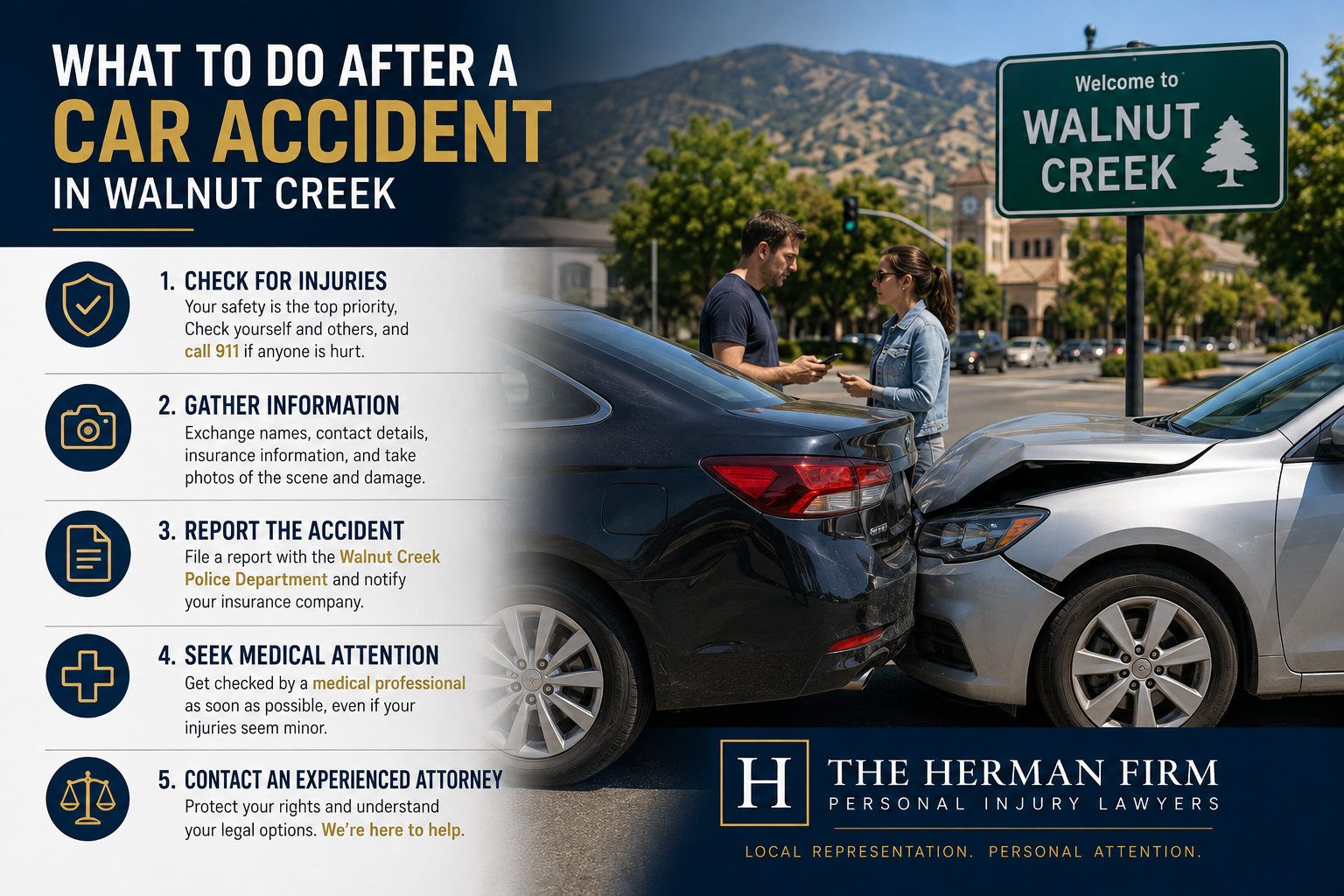
What to Do After a Car Accident in Walnut Creek
Car accidents happen fast. One moment you’re driving to work or picking up groceries on Ygnacio Valley Road, and the next you’re standing on the shoulder trying to process what just happened. In that first rush of adrenaline, it’s easy to forget the steps that protect both your health and your right to fair compensation later on.
Walnut Creek’s mix of busy commercial corridors, highway on-ramps, and residential streets means collisions can happen almost anywhere. What you do in the minutes, hours, and days after a crash can make a real difference in how your claim turns out.
After a car accident, check for injuries and call 911, move to safety if you can, and document the scene with photos and witness information. Avoid discussing fault at the scene. Seek medical care within 24 to 48 hours even if you feel fine, be cautious about giving recorded statements to the other driver’s insurer, and keep every record connected to the crash. Speaking with a personal injury attorney before accepting any settlement helps protect the value of your claim.
1. Check for Injuries and Call 911
Your safety comes first. Check yourself and any passengers, and call 911 immediately if anyone is hurt. Even if injuries seem minor, it’s worth requesting medical evaluation at the scene, since adrenaline can mask pain and some injuries, like whiplash or internal trauma, don’t show symptoms right away.
Calling the police matters for another reason: an official police report creates a documented, timestamped account of the crash, and it often becomes a key piece of evidence when dealing with insurance companies later.
2. Move to Safety, If Possible
If your vehicle is drivable and you’re not seriously injured, move it out of traffic to prevent a secondary collision and turn on your hazard lights. If you can’t move your car safely, stay inside with your seatbelt on and hazards on until help arrives.
3. Document Everything at the Scene
Once you’re safe, start gathering information. This documentation can be invaluable later:
- Photos and video of all vehicles involved, from multiple angles
- Photos of the scene, including skid marks, road conditions, traffic signs, and weather
- Photos of visible injuries
- Contact and insurance information for every driver involved
- Names and contact information for any witnesses
- The responding officer’s name, badge number, and report number
If you’re too injured to gather this yourself, ask a passenger or bystander to help, or simply focus on your health and let the police report fill in the gaps.
Avoid admitting fault, apologizing in a way that could be read as an admission, or speculating about the cause of the crash. Statements like “I didn’t see them” or “I’m sorry” can be used against you later, even if you didn’t mean them that way. Stick to the facts with police, and avoid discussing the crash on social media.
4. Seek Medical Attention Right Away
Even if you decline treatment at the scene, see a doctor as soon as possible, ideally within 24 to 48 hours. This does two things: it catches hidden injuries early, and it creates a medical record connecting your injuries to the accident. Gaps in treatment are one of the most common ways insurance companies try to minimize a claim, arguing that if you were really hurt, you would have sought care sooner.
5. Be Cautious With Insurance Companies
You’ll likely hear from your own insurer and possibly the other driver’s insurer soon after the crash. While you’re required to cooperate with your own insurance company, you’re generally not obligated to give a recorded statement to the other driver’s insurer, and in most cases you shouldn’t without first speaking to an attorney. Adjusters are trained to ask questions designed to minimize the value of your claim or shift blame toward you.
6. Keep Records of Everything
Save copies of medical bills, repair estimates, pay stubs showing missed work, and any correspondence with insurance companies. These records help establish the full scope of your damages, not just medical costs, but lost income, property damage, and the broader impact the accident has had on your life.
Not sure what steps to take next, or what your claim may be worth? A free, private case review can help.
Get a Free Case Review7. Talk to a Personal Injury Attorney
You don’t have to figure this out alone. An experienced personal injury attorney can evaluate your case, handle communications with insurance companies, and make sure you’re not pressured into accepting a settlement that doesn’t reflect the true value of your claim. Most personal injury attorneys, including our team at The Herman Firm, offer free consultations and work on a contingency fee basis, meaning you pay nothing unless we recover compensation for you.
Frequently Asked Questions
How long do I have to file a car accident claim in California?
Generally two years from the date of the accident under Code of Civil Procedure section 335.1. Claims involving a government vehicle or entity can carry much shorter deadlines, so it’s best to get advice early.
Do I have to give a recorded statement to the other driver’s insurance company?
No. You’re required to cooperate with your own insurer, but you’re generally not obligated to give a recorded statement to the other driver’s insurance company, and speaking with an attorney first is usually a good idea.
What if I was partly at fault for the accident?
California follows a pure comparative negligence rule, so you may still be able to recover compensation even if you share some fault, though your recovery would be reduced by your percentage of responsibility.
How soon should I see a doctor after a car accident?
As soon as possible, ideally within 24 to 48 hours, even if you feel okay. Prompt treatment catches injuries that aren’t immediately obvious and creates a medical record linking them to the crash.
Injured in a Walnut Creek Car Accident?
Recovering from a car accident is stressful enough without navigating insurance claims and deadlines alone. Consultations are free, and you pay nothing unless we win.
Call 925-532-1977 Request a Free Case ReviewThis article is provided for general informational purposes only and does not constitute legal advice. Reading this post does not create an attorney-client relationship with The Herman Firm. Every case is different, and past results do not guarantee a similar outcome. For advice about your specific situation, please contact our office for a free consultation.