

Building Your Claim
What Evidence Should You Keep After an Injury?
The strength of a personal injury claim usually comes down to evidence. Two people can suffer nearly identical injuries in nearly identical accidents, and end up with very different results simply because one of them preserved the right documentation and the other did not. Most of this evidence has a short shelf life, disappearing or losing value within days or weeks if it is not captured early.
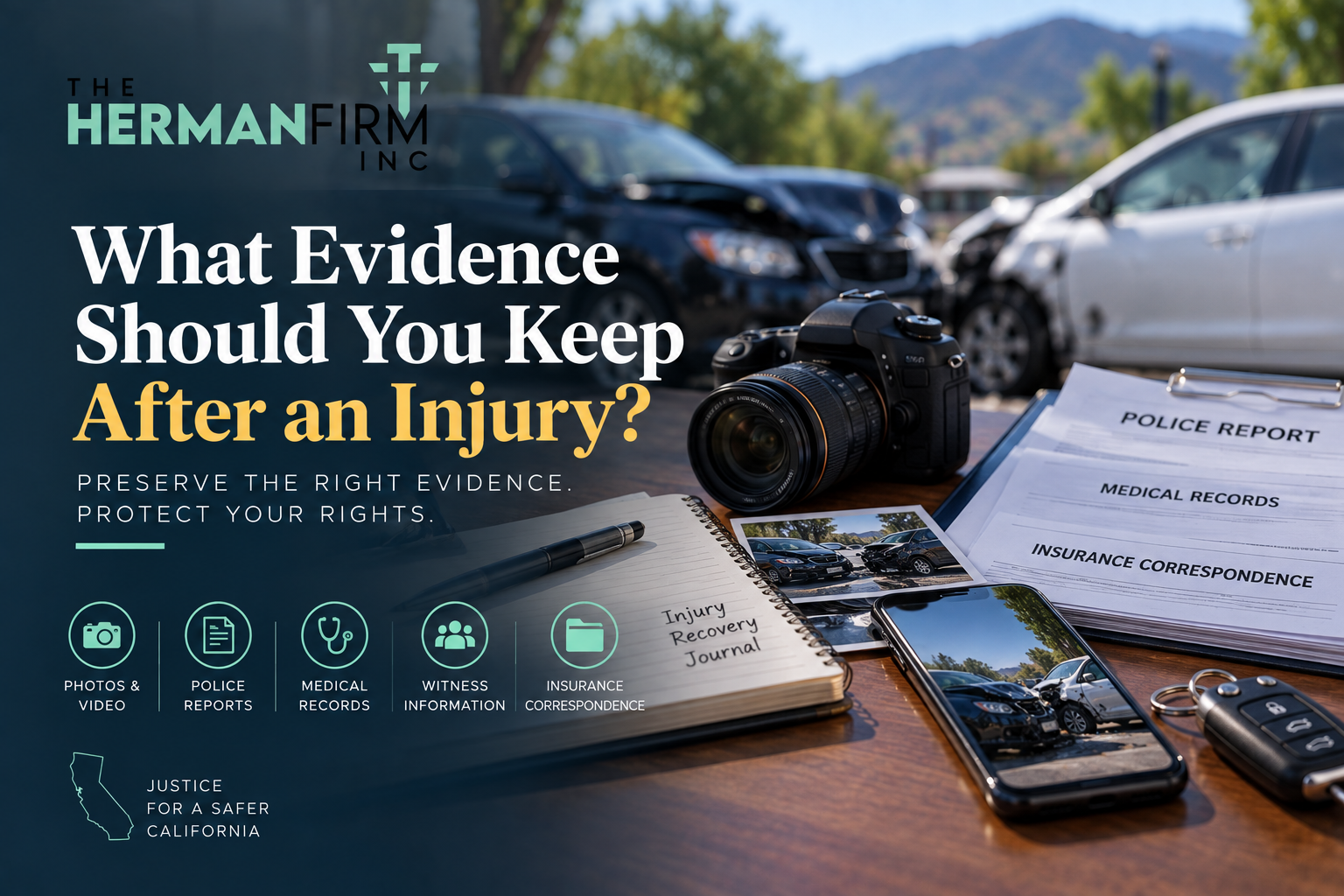
Keep photos of the scene and your injuries, contact information for witnesses, the police or incident report, all medical records and bills, proof of lost income, any correspondence with insurance companies, and the damaged property itself when possible. The sooner this evidence is gathered and preserved, the stronger your claim tends to be.
Why Evidence Matters So Much in a Personal Injury Claim
Insurance companies do not take an injured person’s word for what happened. Every element of a claim, how the accident occurred, who was at fault, how severe the injuries are, and how those injuries have affected your life, generally needs to be supported by documentation. Without that support, even a legitimate claim can be undervalued or denied outright. Evidence is what turns your account of events into something an insurance company or a jury can actually verify.
Evidence to Preserve, Step by Step
-
Photos and Video of the Scene
Take photos of the accident scene, vehicle damage, road or property conditions, and any visible injuries as soon as it is safe to do so. Conditions change quickly, and photos taken days later rarely capture what things actually looked like at the time.
-
Witness Contact Information
Get the names and phone numbers of anyone who saw what happened. Witnesses often do not stick around, and memories fade quickly, so this information becomes much harder to obtain later.
-
The Police or Incident Report
Request a copy of any police report filed at the scene, or an incident report if the injury occurred on someone else’s property. These reports often include officer observations, statements, and sometimes an initial assessment of fault.
-
Complete Medical Records
Keep records from every provider you see related to the injury, including emergency room visits, follow-up appointments, physical therapy, and any specialist care. Gaps in treatment can be used by insurers to argue your injury was not serious.
-
Proof of Lost Income
Pay stubs, employer letters, and tax documents help establish lost wages and reduced earning capacity if your injury kept you out of work or affected your ability to earn.
-
All Insurance Correspondence
Save every email, letter, and note from phone calls with insurance adjusters, including the date, time, and substance of what was discussed. This record can matter significantly if a dispute arises later about what was said or offered.
-
The Physical Evidence Itself
Where possible, keep damaged property, such as a helmet, clothing, or a broken item involved in the incident, rather than repairing or discarding it right away. Physical evidence can sometimes reveal details that photos alone cannot.
Many people wait until they decide to hire an attorney before starting to gather evidence. By then, surveillance footage may have been deleted, witnesses may be unreachable, and the scene may have changed. Start preserving evidence as early as possible, even before you have decided whether to pursue a claim.
Keep a Simple Injury and Recovery Journal
A brief, dated record of your symptoms, pain levels, missed activities, and how your injury has affected daily life can become valuable evidence of the real impact of your injuries, something medical records alone do not always capture. This does not need to be lengthy. A few sentences a few times a week is generally enough to create a useful record over time.
Not sure what evidence matters most for your specific situation? A free case review can help you understand what to prioritize.
Get a Free Case ReviewWhat to Avoid Doing
Avoid posting about your accident or injuries on social media, since insurance companies routinely review public posts looking for anything that contradicts your claim. Avoid giving a recorded statement to an insurance company, including your own, before speaking with an attorney. And avoid signing any settlement release before you understand the full extent of your injuries and their likely future impact, since a signed release typically closes the door on recovering more later.
Why Timing Matters
Surveillance footage from nearby businesses is often overwritten within days or weeks. Witnesses move or lose contact information. Physical evidence gets discarded or repaired. The longer evidence collection is delayed, the more of it tends to disappear, which is why acting quickly after an injury, even before deciding whether to pursue a claim, generally puts you in a stronger position later.
Frequently Asked Questions
What if I did not take photos at the scene?
It is not ideal, but not necessarily fatal to your claim. Photos of the location as it currently exists, medical documentation, and witness statements can still support your case, though acting quickly to gather what remains is important.
Do I need to keep every single medical bill?
Yes. Even minor bills and receipts related to your treatment can add up and support the full value of your medical expenses claim. Keep everything, including receipts for over-the-counter items related to your recovery.
Should I get my own copy of the police report?
Yes. Do not assume the insurance company will provide it or that it will accurately reflect everything you remember. Request your own copy directly from the relevant law enforcement agency.
Is it too late to gather evidence if it has already been a few weeks?
Some evidence may already be lost, but medical records, ongoing symptoms, and other documentation are often still available. The sooner you start from this point forward, the better, even if some early evidence is no longer recoverable.
Not Sure What Evidence You Need?
Every case at The Herman Firm gets direct attorney attention from the first call. Consultations are free, and you pay nothing unless we win.
Call 925-532-1977 Request a Free Case Review