

Motorcycle Accidents
Is Lane Splitting Legal for Motorcyclists in California?
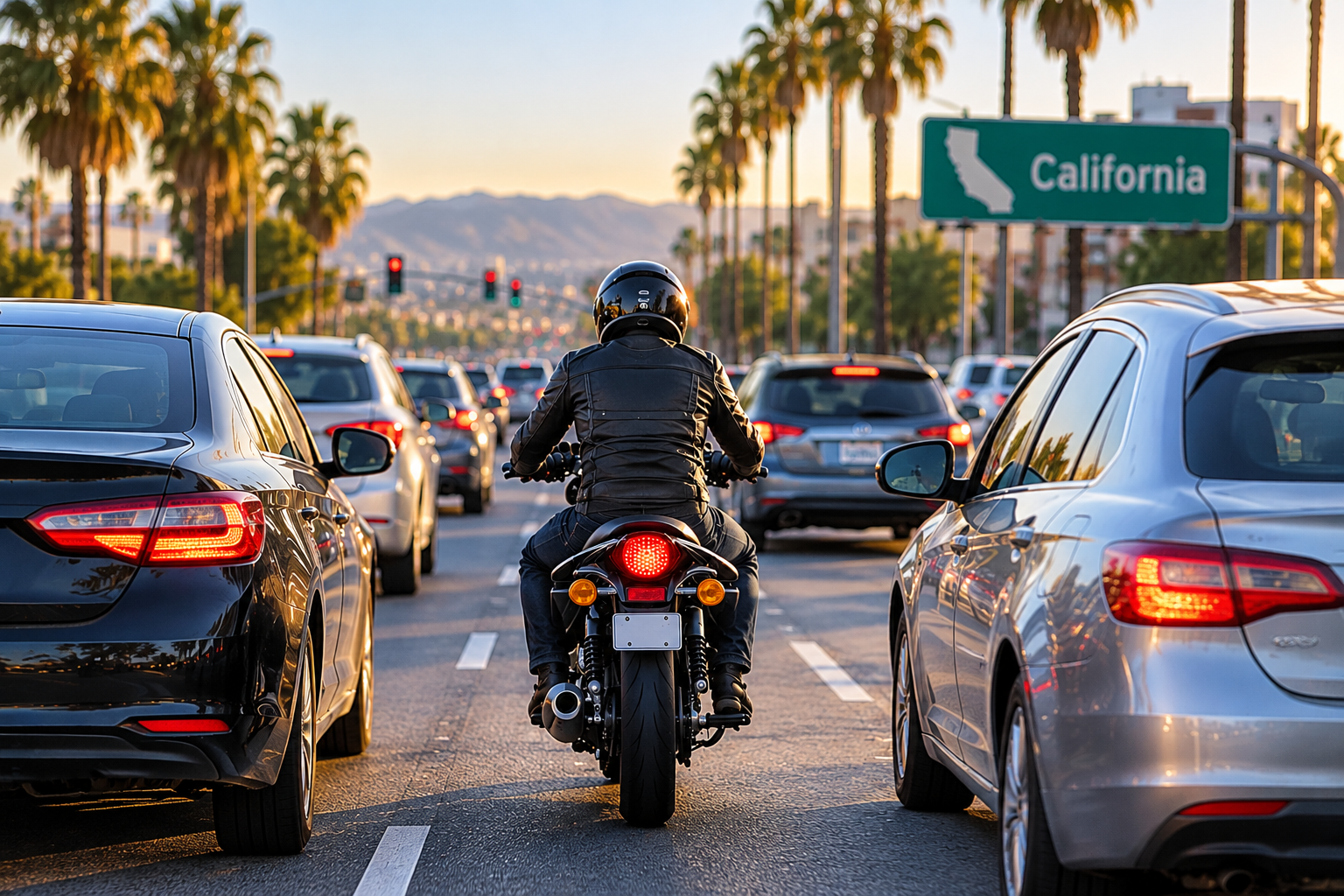
Yes. Lane splitting is legal for motorcyclists in California, which is the only state that has written it into its Vehicle Code. Riders may travel between lanes of stopped or moving traffic, but they must do so safely and prudently, since the law sets no specific speed limit for lane splitting. Being between lanes at the time of a crash does not by itself prevent you from recovering compensation, though an insurer may argue you split lanes unsafely to reduce your claim under comparative fault.
Lane splitting is legal in California under Vehicle Code Section 21658.1. A rider who was splitting lanes can still recover compensation after a crash, but riding much faster than traffic or splitting in unsafe conditions may reduce the claim under pure comparative fault.
Many riders also worry that being between lanes at the time of a crash means they are automatically at fault. That is not how California law works, and understanding why can make a real difference in how you handle the claim.
Is Lane Splitting Legal in California?
Yes. In 2016, California added Vehicle Code Section 21658.1, which defines lane splitting as riding a two-wheeled motorcycle between rows of stopped or moving vehicles in the same lane, including on divided and undivided streets and highways. The law also authorized the California Highway Patrol to develop educational safety guidelines for riders. It does not set a specific speed limit for lane splitting. Instead, riders are expected to split lanes in a safe and prudent way, and the CHP’s safety tips encourage riders to consider traffic speed, lane width, road conditions, and surrounding vehicles.
How Lane Splitting Can Affect Fault
California follows pure comparative fault. If you are found partly responsible for a crash, your compensation is reduced by your percentage of fault, but you can still recover. Because lane splitting is legal, the question is not whether you were splitting lanes but whether you were doing it safely. Insurers commonly raise arguments like these:
| Insurer Argument | How It Is Often Answered |
|---|---|
| You were going much faster than traffic | Speed evidence from helmet cameras, dashcams, witnesses, or crash reconstruction |
| Traffic was moving too fast to split lanes safely | Evidence of actual traffic conditions, such as congestion or stopped vehicles |
| The driver could not have seen you | Proof the driver failed to check mirrors or signal before changing lanes |
| You were riding in a blind spot | Evidence of how long you were visible and what the driver was doing, such as phone use |
Many lane splitting crashes happen when a driver changes lanes without signaling or checking mirrors, or opens a door into traffic. Drivers have a duty to make sure a lane change can be made safely, and that duty does not disappear because a motorcycle is between lanes.
Insurance adjusters and even jurors sometimes assume motorcyclists are reckless. Clear, objective evidence of how you were riding is often the best way to counter that assumption.
Evidence That Helps in a Lane Splitting Case
-
Helmet Camera or Dashcam Footage
Video showing your speed and the traffic around you is often the most persuasive evidence available. Save the original file right away.
-
Witness Statements
Other drivers and riders can confirm traffic speed and how the collision happened.
-
Photos of Vehicle Damage
The location of damage on both vehicles can show whether a car moved into your path.
-
Police Report
The report may note statements from the driver, such as admitting they did not see you.
-
Medical Records
Prompt treatment records connect your injuries to the crash and show their severity.
Insurers often use lane splitting to shift blame onto riders. A free case review can help you understand where you stand.
Get a Free Case ReviewLane Splitting vs. Unsafe Riding
Lane splitting is legal, but other conduct can still count against a rider. Riding on the shoulder, weaving across multiple lanes, or traveling at a speed far beyond surrounding traffic may be treated as unsafe riding. Splitting lanes next to large trucks or buses, where there is little room and limited visibility, may also be questioned. The specific facts of your ride matter far more than the general fact that you were between lanes.
Lane Splitting in San Francisco, Berkeley and the East Bay
Riders in San Francisco, Berkeley, Walnut Creek, and across the East Bay regularly split lanes on congested routes such as US-101, Interstate 80, Interstate 580, Highway 24, and Interstate 680, where stop-and-go traffic is common. Dense urban streets in Berkeley and Oakland add risks from parked cars, sudden lane changes, and opening doors. Whether you need a Berkeley motorcycle accident lawyer or representation elsewhere in the East Bay, local knowledge of these roads can help reconstruct how a crash happened.
Deadlines That Apply
Most California injury lawsuits must be filed within two years under Code of Civil Procedure Section 335.1. If a government vehicle or a dangerous road condition was involved, a claim generally must be filed within six months under Government Code Section 911.2.
Learn more on our Walnut Creek motorcycle accident lawyer page, or read what evidence you should keep after an injury.
Frequently Asked Questions
Is lane splitting legal in California?
Yes. California Vehicle Code Section 21658.1 recognizes lane splitting, and California is the only state that has written it into law.
Can I still recover if I was lane splitting when I crashed?
Yes. Lane splitting alone does not bar recovery. If you were found partly at fault, your compensation would be reduced by your share of fault, not eliminated.
Is there a speed limit for lane splitting?
The law does not set a specific lane splitting speed limit, but riders are expected to split lanes safely, and riding much faster than surrounding traffic may be treated as unsafe.
Should I keep my helmet camera footage?
Yes. Save the original file and back it up. Video of your speed and traffic conditions can be some of the strongest evidence in a motorcycle case.
Injured in a Motorcycle Accident?
Every case at The Herman Firm gets direct attorney attention from the first call. Consultations are free, and you pay no attorney fees unless we recover compensation for you.
Call 925-532-1977 Request a Free Case ReviewAsk us during your consultation how case costs are handled.